.svg)

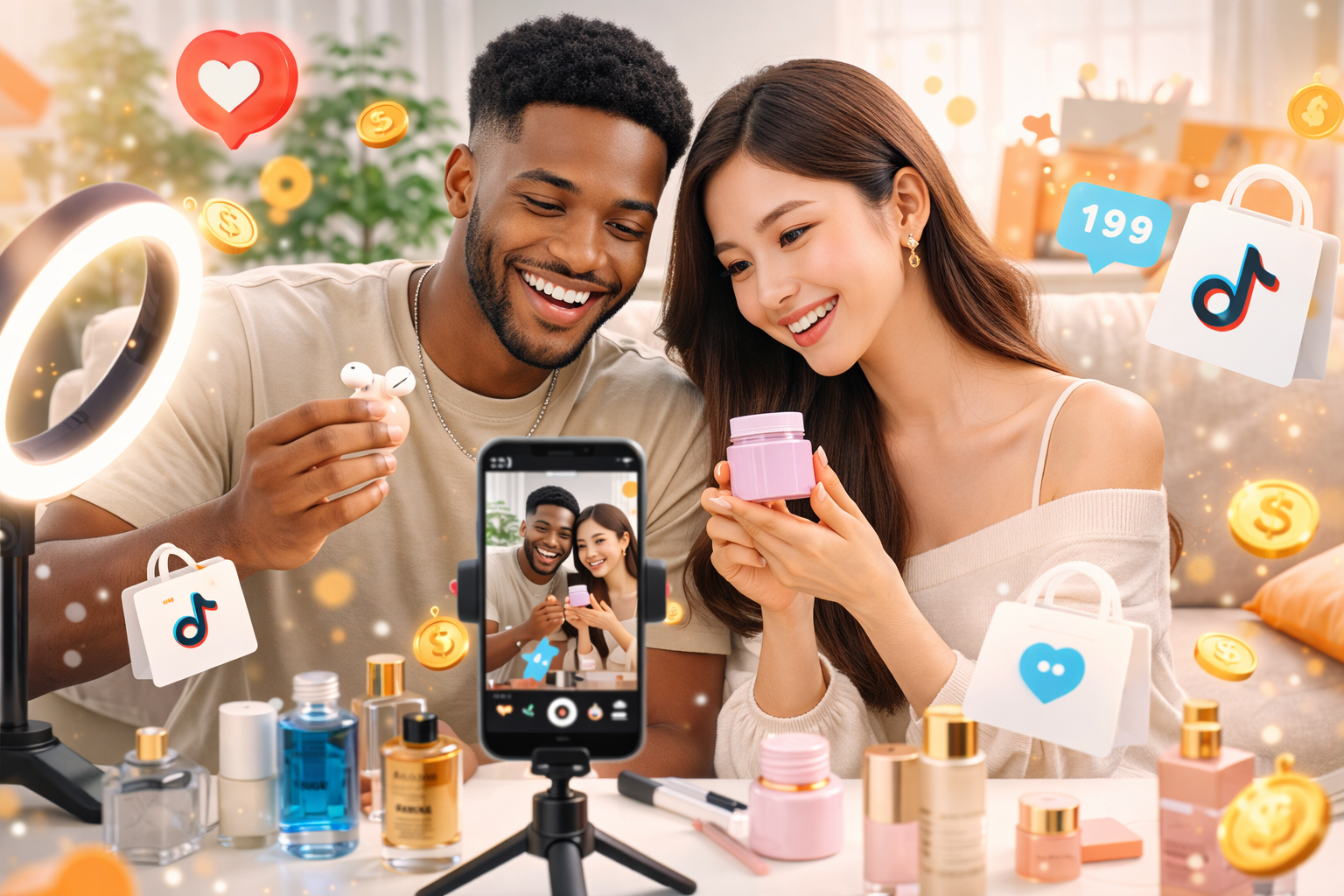
TikTok Shop has quickly evolved from a social media experiment into a major driver of social commerce. Increasingly, product discovery, recommendation, and purchase all happen within creator-led videos. Research shows that repeat purchase rates on TikTok Shop reached 81.3% by late 2025, rising sharply from 64% in 2023. In other words, successful creator collaborations can generate not only initial sales but also long-term customer relationships.
Yet many brands struggle to turn creator collaborations into consistent results. While finding TikTok creators often receives the most attention, the real challenge lies in how brands work with TikTok Shop creators after the first contact. Without structured testing, clear incentives, and scalable collaboration frameworks, even promising creator partnerships may fail to deliver meaningful sales.
In practice, the most effective TikTok Shop strategies treat creators not as one-time influencers but as long-term commerce partners. This guide explores how brands can work with TikTok creators through structured pilot campaigns, performance-aligned partnerships, and scalable collaboration systems that benefit both the brand and the creator.
For many brands entering TikTok Shop, working with creators appears straightforward: send products, ask for a few videos, and hope one of them goes viral. In reality, this approach rarely produces consistent results. TikTok creator collaborations often fail not because the creators lack influence, but because the partnership structure is unclear from the beginning.
One common mistake is treating creators as short-term advertising channels rather than long-term partners. Brands sometimes expect immediate sales from a single video, even though audience trust usually develops through repeated exposure. When results do not appear instantly, the collaboration ends before the creator has the opportunity to build genuine credibility with their audience.
Another challenge comes from the way many brands evaluate creator performance. Instead of focusing on product clicks, conversions, and customer questions in the comments, companies often judge campaigns based only on views or follower counts. However, social commerce on TikTok works differently from traditional influencer marketing. Sales typically come from creators whose audiences trust their recommendations, even if their follower numbers are relatively modest.
Without structured testing and clear expectations, many creator partnerships become one-off experiments rather than sustainable sales channels. For this reason, successful brands usually begin with small pilot collaborations before scaling creator partnerships further.
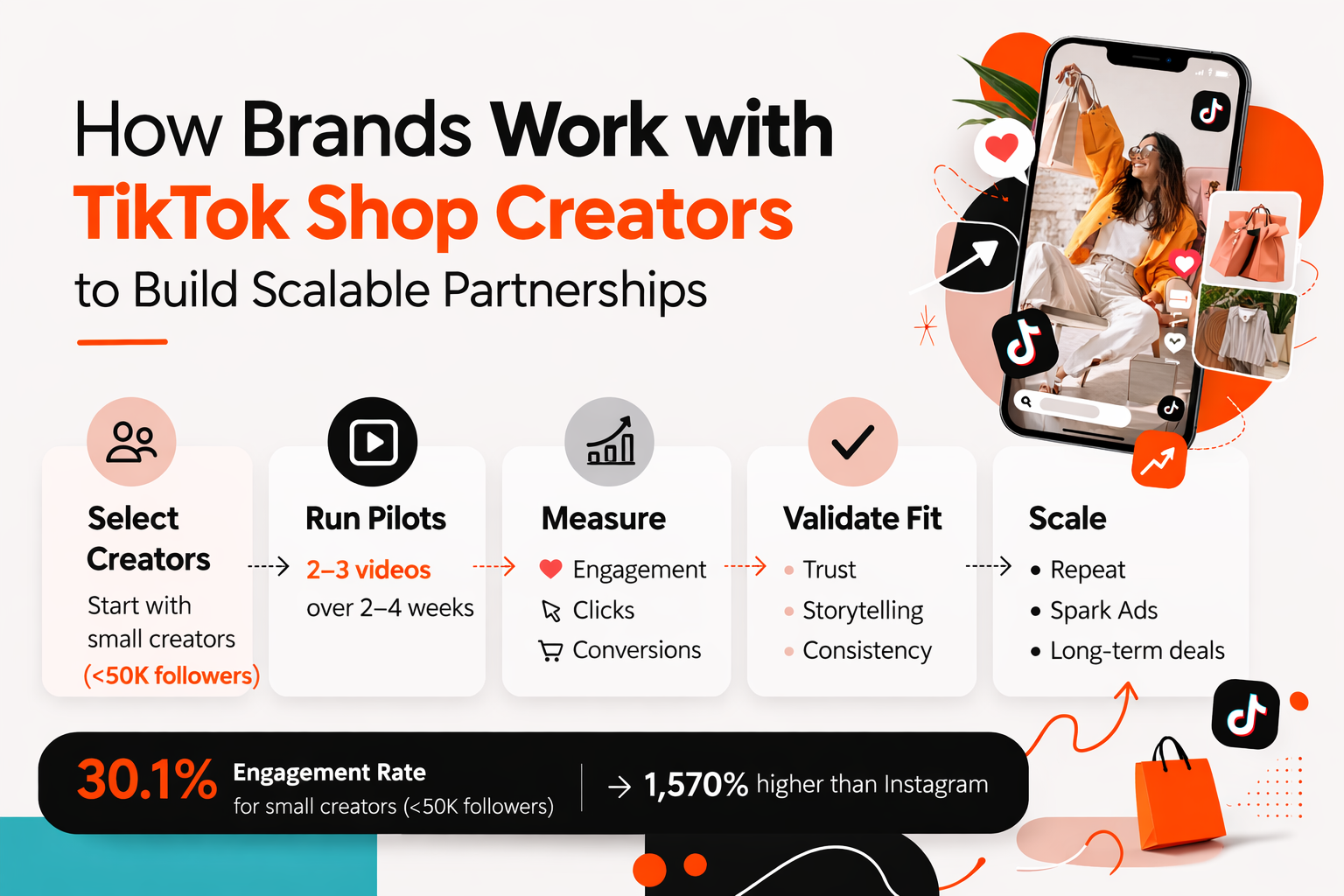
Because TikTok creator performance varies widely, many brands begin with small pilot campaigns before committing to long-term partnerships. Instead of investing heavily in a single influencer, companies often test several creators with limited collaborations to see how their audiences respond to the product.
This approach works particularly well with smaller creators. Data from TTSVibes affiliate benchmarks shows that creators with fewer than 50,000 followers achieve an average 30.1% engagement rate on TikTok affiliate content in 2026, about 1,570% higher than Instagram. High engagement makes smaller creators useful for validating campaigns without large marketing budgets.
Rather than judging results from a single post, many TikTok Shop operators test creators with two or three videos. This helps determine whether interest and purchase intent remain consistent before scaling the partnership.
After pilot campaigns identify promising creators, the next step is structuring partnerships that align incentives between brands and creators. On TikTok Shop, collaborations tend to perform best when creators are rewarded based on real sales performance rather than fixed sponsorship fees alone. This approach encourages creators to produce authentic content that resonates with their audience.
According to affiliate benchmarks compiled by TTSVibes, niche TikTok creators can convert 1.5–3.0% of impressions into purchases, roughly 200–400% higher than average social commerce conversion rates, highlighting the effectiveness of performance-based creator partnerships. Common partnership structures include:
These performance-aligned structures help create mutually beneficial collaborations, where creators are motivated to promote products effectively while brands maintain sustainable marketing costs.
After running pilot campaigns and testing different partnership structures, brands can begin identifying which creators deserve deeper collaboration. Not every creator who produces engaging content will generate consistent product sales. The goal is to find creators whose content repeatedly drives audience interest and purchase behaviour. Rather than focusing only on follower counts, successful TikTok Shop operators evaluate creators based on how effectively their content converts attention into sales.
Key signals that a creator is worth scaling include:
Once high-performing creators are identified, brands can begin expanding the partnership to generate more consistent sales. Instead of continuously searching for new influencers, many successful TikTok Shop operators focus on deepening relationships with creators who have already demonstrated strong product performance.
Common ways brands scale creator collaborations include:
These scaling strategies are particularly important in TikTok Shop’s social commerce ecosystem. Research shows that repeat purchase rates on TikTok Shop reached 81.3%, indicating that strong creator partnerships can help brands build long-term customer relationships rather than one-time purchases.

While individual creator campaigns can generate short-term sales, long-term success on TikTok Shop usually comes from building a structured creator partnership system. Instead of relying on occasional influencer collaborations, many successful brands treat creator partnerships as an ongoing growth channel within their eCommerce strategy.
Key elements of a sustainable TikTok creator program include:
Over time, this structured approach allows brands to build a reliable creator ecosystem where multiple partners contribute to product discovery, customer trust, and repeat purchases.
Working with TikTok Shop creators requires more than simply sending products to influencers and hoping a video goes viral. Successful brands usually approach creator collaborations as a structured process that begins with small pilot campaigns, followed by performance-based partnerships and long-term scaling strategies.
By testing multiple creators, aligning incentives through affiliate-driven collaborations, and building deeper relationships with high-performing partners, brands can gradually develop a reliable creator ecosystem. Over time, these partnerships not only generate immediate product sales but also strengthen customer trust and encourage repeat purchases.
For brands looking to scale their TikTok Shop presence more efficiently, working with experienced operators can help streamline creator sourcing, campaign testing, and partnership management. Agencies such as eCOMMop specialize in helping eCommerce brands build structured creator programs that turn TikTok content into sustainable revenue channels.
Most agencies own a slice. The TikTok agency doesn't see your Amazon listing performance. Your Amazon manager doesn't know what's going viral on TikTok. Your Shopify CRO consultant doesn't see either.
We see all of it. Same team, same dashboards, same weekly review. When a TikTok video starts converting at 4×, we know to push that creative into Amazon Sponsored Brands and Shopify paid social — that same week. When Amazon shows a SKU running hot in Texas, we ramp creator seeding for that geo.
That's what "one engine" means in practice. One team. One dataset. One P&L view.