.svg)


Amazon dominates online shopping across much of North America and Europe. For many consumers, the company has become the default destination for everything from electronics and home goods to fashion and office supplies.
China, however, built a very different eCommerce landscape.
Although Amazon entered China in 2004 through the acquisition of Joyo.com, the company struggled to keep pace with local competitors that were rapidly reshaping how consumers discovered and purchased products online. By 2019, Amazon had shut down its domestic marketplace operations in China, marking the end of its attempt to compete directly in one of the world's most dynamic eCommerce markets. As reported by Reuters, local platforms had already established overwhelming advantages in user engagement, mobile commerce, logistics, and digital payments.
Today, China is home to the world's largest eCommerce market. According to the U.S. Commercial Service's China eCommerce Guide, the country continues to lead global online retail activity, serving hundreds of millions of digital consumers and generating trillions of dollars in annual online sales.
For eCommerce entrepreneurs, these platforms are far more than online shopping websites. Many Shopify brands, Amazon sellers, and TikTok Shop operators use Chinese marketplaces to identify emerging trends, research competitors, discover suppliers, and source products long before they become popular in Western markets.
So what is the Chinese equivalent of Amazon?
The answer is more complicated than most people expect. Rather than one dominant platform, China has developed an ecosystem of specialised marketplaces, each serving a different role in the online retail economy.
One of the most common assumptions among Western entrepreneurs is that Amazon should have succeeded in China just as it did elsewhere. In reality, Chinese eCommerce evolved along a completely different path.
While Amazon focused on search-based product discovery and standardised shopping experiences, Chinese platforms built ecosystems around interaction, entertainment, and mobile commerce. Consumers became accustomed to communicating directly with sellers, participating in livestream shopping events, receiving personalised recommendations, and completing purchases through integrated digital wallets.
Platforms such as Taobao and Tmall transformed shopping into a highly engaging experience. JD.com invested heavily in logistics infrastructure, while newer entrants such as Pinduoduo introduced group-buying models that encouraged users to share deals with friends and family.
By the time Amazon attempted to strengthen its position, local competitors had already established powerful network effects and deep consumer loyalty. The company's eventual withdrawal highlighted an important reality: China's online retail market was no longer following the Western eCommerce playbook.
Today, many of the innovations pioneered by Chinese platforms, including social commerce, livestream selling, and creator-driven shopping, are influencing global eCommerce strategies and helping shape the future of platforms like TikTok Shop.
The search for a Chinese Amazon equivalent often leads to confusion because Amazon performs multiple functions under a single brand.
Amazon operates as:
China's eCommerce market distributes those functions across several specialised platforms.
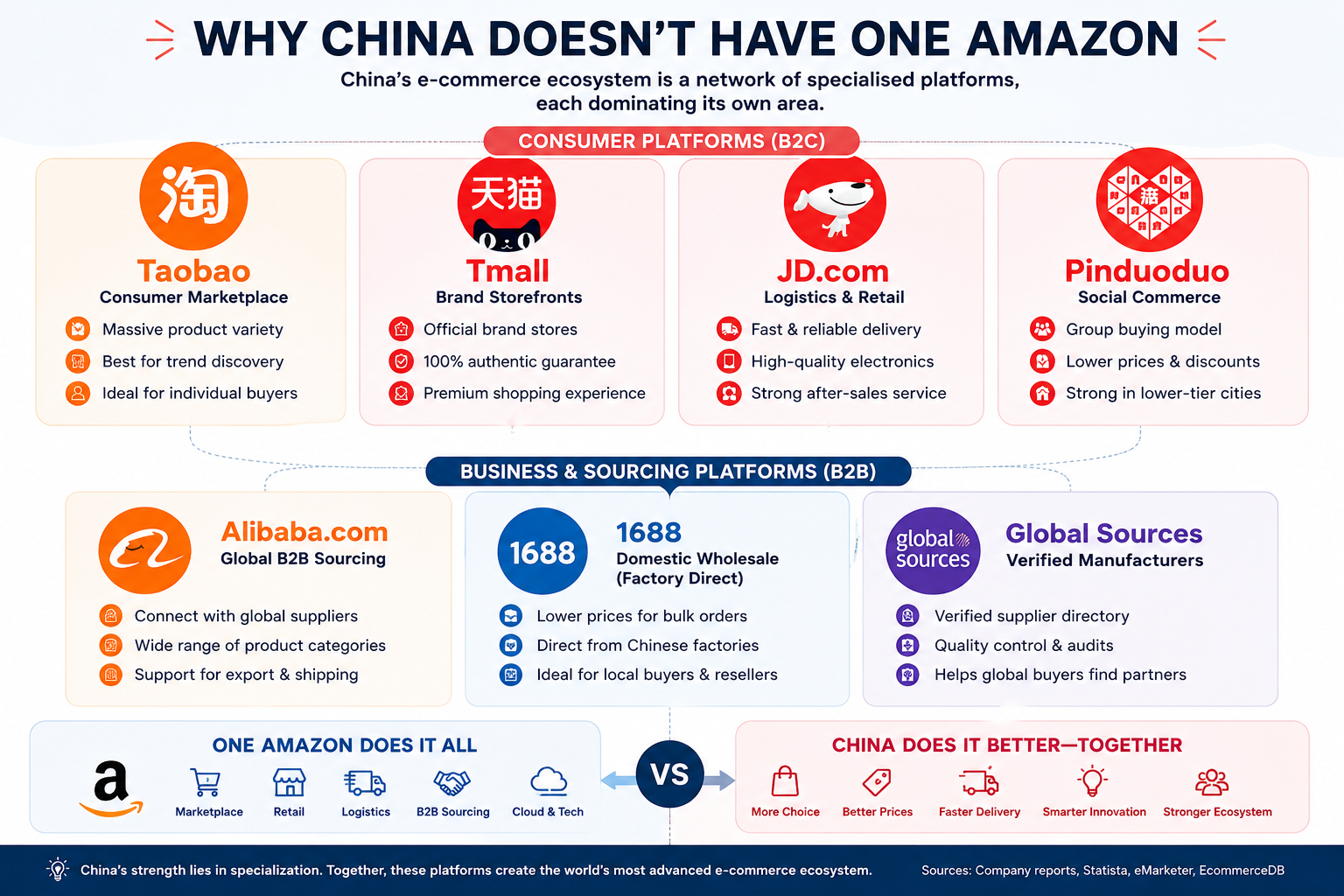
Each platform serves a different audience and purpose. Together, they form one of the most sophisticated eCommerce ecosystems in the world.
For entrepreneurs, understanding these differences can provide valuable insights into sourcing, product research, pricing strategies, and market trends.
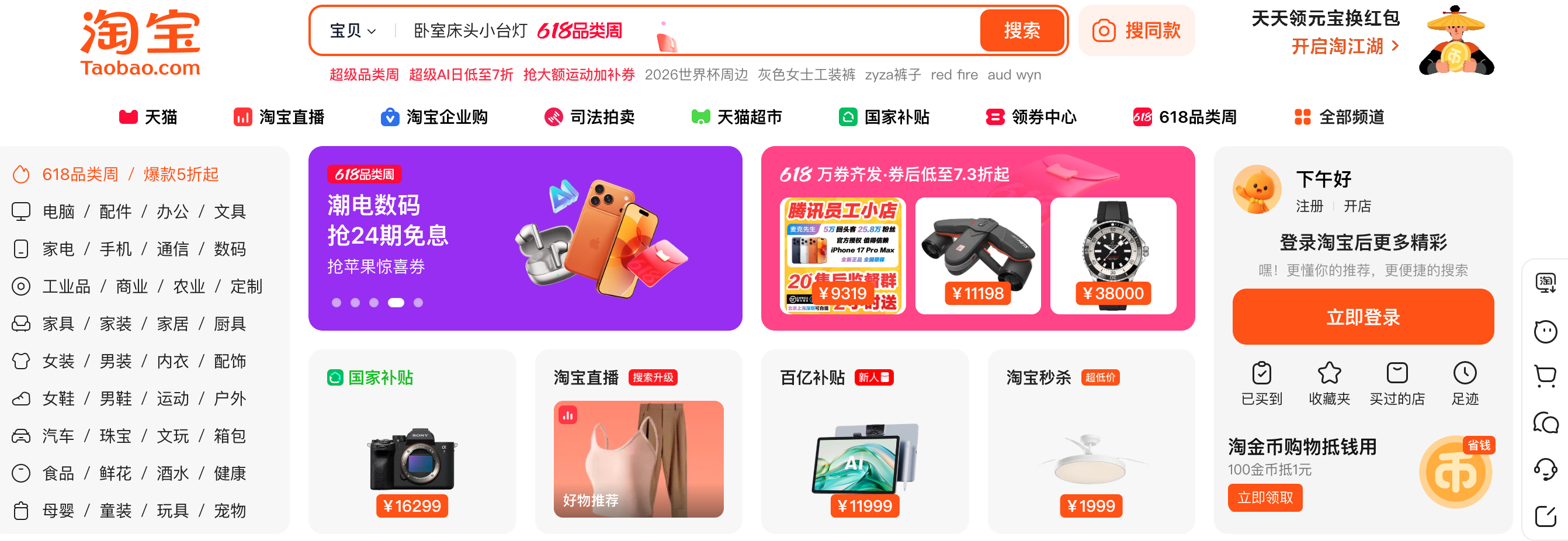
When discussing Chinese eCommerce, Taobao is often the first platform that comes to mind.
Founded in 2003 by Alibaba Group, Taobao has become one of the world's largest online marketplaces, hosting millions of merchants and an enormous variety of products. Whether consumers are looking for fashion accessories, electronics, home furnishings, collectibles, or niche hobby products, there is a strong chance they will find them on Taobao.
What makes Taobao particularly interesting is its role as a trend incubator.
Unlike Amazon, where product discovery is largely search-driven, Taobao encourages exploration through livestreams, short-form videos, recommendations, and seller-generated content. New product ideas often gain traction on Taobao months before reaching international markets.
Many eCommerce operators monitor the platform to identify:
For Shopify and TikTok Shop sellers, Taobao can function as an early-warning system for discovering products with viral potential.
While Taobao is known for its vast marketplace, Tmall focuses on official brand retail.
Operated by Alibaba Group, Tmall allows established domestic and international brands to operate official storefronts within a trusted shopping environment. Major companies across beauty, fashion, luxury goods, consumer electronics, and household products use the platform to reach Chinese consumers.
One reason for Tmall's success is consumer confidence.
Unlike open marketplaces where multiple sellers may offer the same product, Tmall places greater emphasis on authenticity and authorised distribution. This positioning has made the platform particularly attractive to premium and international brands entering China.
For eCommerce entrepreneurs, Tmall offers valuable insight into how successful brands adapt their product positioning for the Chinese market. Product pages often feature different messaging, imagery, promotions, and customer engagement strategies than their Western counterparts.
Studying leading Tmall stores can reveal how consumer expectations evolve in one of the world's most competitive retail environments.
If Taobao represents variety and Tmall represents branding, JD.com represents operational excellence.
Founded in 1998, JD.com has built one of the most advanced logistics networks in the world. Unlike many marketplace competitors, the company invested heavily in warehouses, fulfilment centres, delivery infrastructure, and inventory management systems.
This approach enabled JD to offer faster delivery times and stronger quality control than many competing platforms.
Today, JD remains particularly influential in categories where authenticity and reliability are essential, including:
The company's logistics capabilities have become a significant competitive advantage and have helped shape consumer expectations around delivery speed across China.
For online sellers, JD provides a useful case study in how supply chain efficiency can influence customer satisfaction, repeat purchases, and long-term brand growth.
As eCommerce becomes increasingly competitive, many businesses are discovering that operational excellence can be just as important as marketing when building a successful online brand.
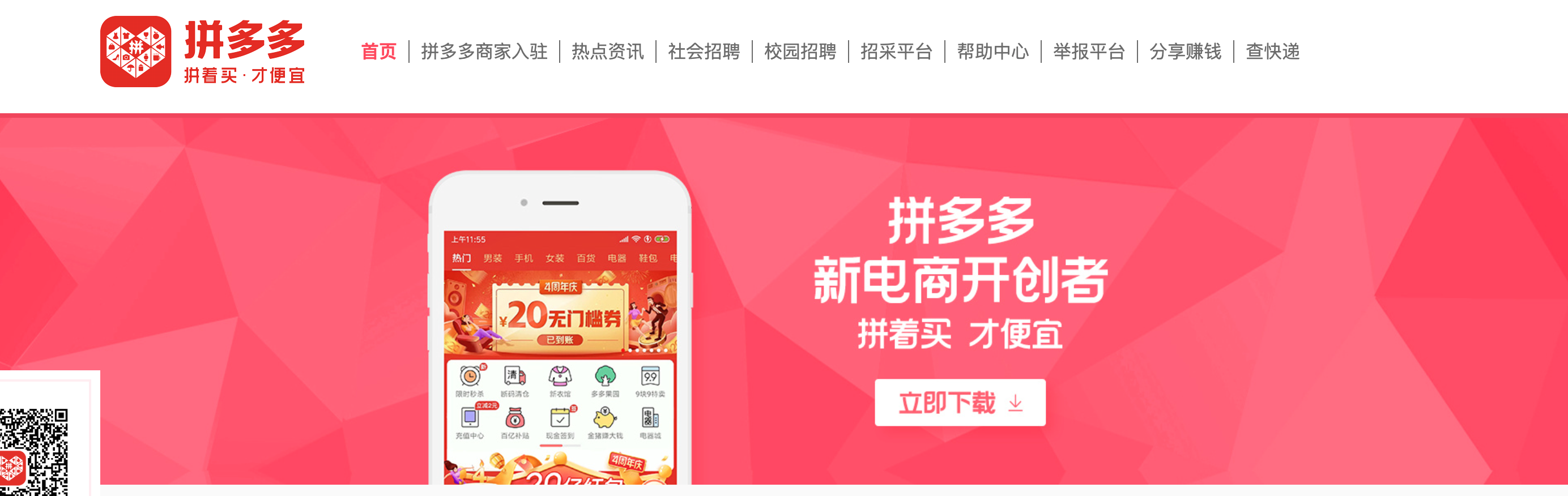
Few companies have disrupted China's eCommerce market as dramatically as Pinduoduo.
Founded in 2015, the platform achieved extraordinary growth by turning shopping into a social activity. Rather than simply searching for products, users could unlock lower prices by purchasing items together with friends, family members, or social contacts.
This group-buying model helped Pinduoduo attract millions of price-conscious consumers, particularly in smaller cities and regional markets that were often overlooked by larger platforms.
Over time, the company expanded beyond discount shopping and became one of China's largest eCommerce businesses. Its parent company, PDD Holdings, later launched Temu, which has rapidly expanded into North America, Europe, and other international markets.
For eCommerce entrepreneurs, Pinduoduo offers valuable insight into consumer behaviour at the value-driven end of the market. The platform provides a window into:
Many products that gain traction on Pinduoduo eventually influence broader global eCommerce trends, particularly in categories where affordability plays a significant role in purchasing decisions.
For businesses looking to source products directly from China, Alibaba is often the first platform they encounter.
Unlike Taobao, Tmall, or JD.com, Alibaba was built specifically for business-to-business transactions. The platform connects buyers with manufacturers, wholesalers, and trading companies across thousands of product categories.
Today, Alibaba remains one of the world's largest B2B marketplaces and serves businesses ranging from small startups to multinational corporations.
Its popularity stems from several advantages:
Many Shopify and Amazon sellers use Alibaba to identify suppliers when launching new products. The platform makes it relatively easy to compare quotations, request samples, and evaluate manufacturers.
However, experienced sourcing professionals rarely stop at Alibaba.
While the platform provides an excellent starting point, the most competitive factories often operate through multiple channels, and some opportunities may never appear on international-facing marketplaces.
This is where deeper sourcing expertise becomes valuable.
If Alibaba is designed for international buyers, 1688 serves China's domestic wholesale market.
Owned by Alibaba Group, 1688 is one of the most powerful sourcing platforms available to businesses, yet it remains relatively unknown outside China.
The platform primarily serves Chinese companies, wholesalers, and distributors. Because suppliers are targeting domestic buyers, pricing is often significantly lower than what international buyers encounter on Alibaba.
For sourcing professionals, 1688 offers several advantages:
The trade-off is accessibility.
Most listings, communications, and transactions are conducted in Chinese. Many suppliers have limited experience working with overseas buyers, which can create challenges around communication, quality expectations, and logistics coordination.
This is one reason many brands work with sourcing partners that understand both Western business expectations and China's manufacturing ecosystem.
A supplier that appears expensive on Alibaba may reveal significantly different pricing on 1688. For growing brands, those differences can have a meaningful impact on profitability.
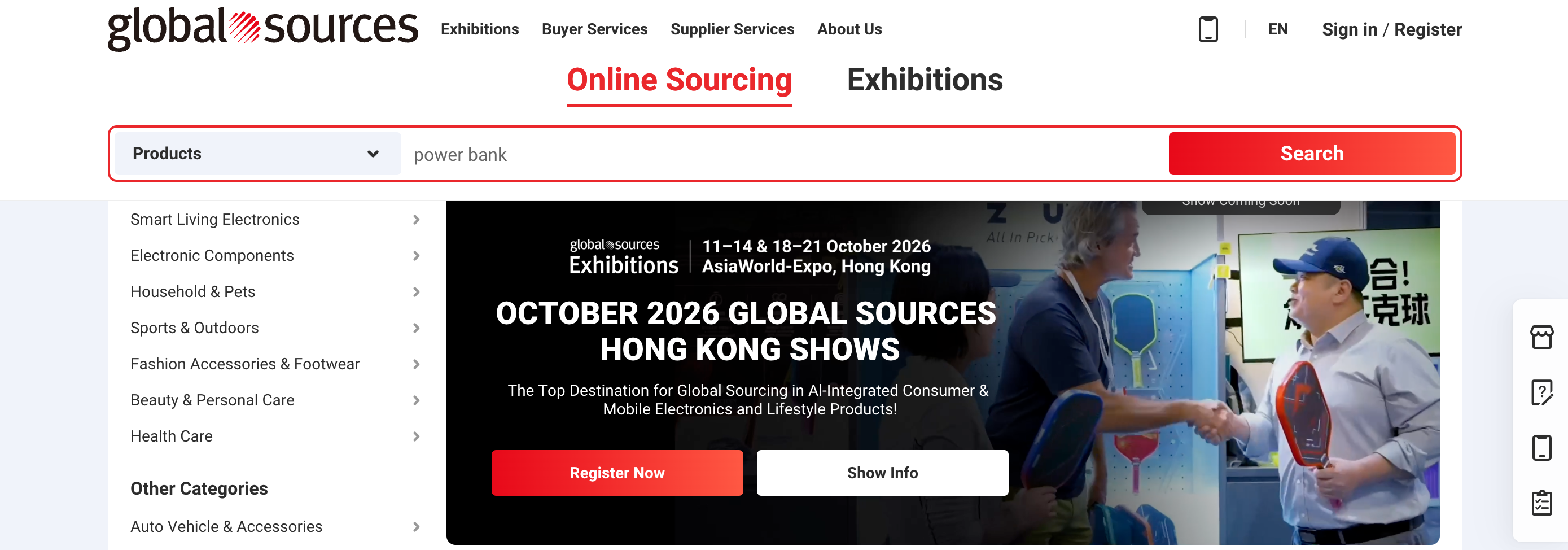
While Alibaba and 1688 dominate discussions about online sourcing, Global Sources occupies a unique position within the industry.
The platform is particularly well known for its supplier verification processes and international trade exhibitions.
Unlike purely transactional marketplaces, Global Sources focuses heavily on connecting buyers with manufacturers that meet specific business requirements. This makes it especially valuable for businesses seeking:
Many importers use Global Sources to identify suppliers before attending trade shows in Hong Kong, Shenzhen, or other manufacturing hubs across Asia.
For brands developing proprietary products or custom packaging, the platform can be an effective way to discover manufacturers that may be difficult to find through traditional online searches.
Most successful online brands use Chinese marketplaces for far more than purchasing inventory.
These platforms have become powerful research tools.
Product development teams frequently monitor Chinese marketplaces to identify emerging trends before they appear in Western markets. By analysing product launches, customer reviews, pricing strategies, and sales activity, businesses can make more informed decisions about inventory investments.
For example, a product gaining traction on Taobao or Pinduoduo today may become a popular TikTok Shop product several months later.
Entrepreneurs often use Chinese platforms to:
This intelligence can help reduce risk when launching new products and improve decision-making throughout the product development process.
Online platforms provide valuable access to suppliers, but they only tell part of the story.
A supplier's listing cannot fully reveal:
As brands scale, these factors become increasingly important.
Many businesses eventually move beyond marketplace-based sourcing and invest in supplier verification, factory audits, sample inspections, and quality assurance processes.
Direct relationships with manufacturers can also create opportunities for:
The most successful brands view sourcing as a long-term strategic function rather than a one-time purchasing decision.
Many entrepreneurs focus heavily on advertising, content creation, and customer acquisition.
Yet some of the most important competitive advantages originate much earlier in the supply chain.
A stronger sourcing strategy can improve:
These advantages become particularly important for businesses selling through platforms such as TikTok Shop, where product quality, customer reviews, and fulfilment performance can directly influence growth.
A unique product sourced through the right manufacturing partner is often easier to market than a commodity item available to hundreds of competing sellers.
For growing eCommerce brands, sourcing is not simply about finding the lowest price. It is about building a reliable foundation that supports long-term growth.
Chinese eCommerce platforms offer extraordinary access to products, suppliers, and market intelligence. Whether you're researching trends on Taobao, evaluating manufacturers on Alibaba, exploring factory-direct opportunities on 1688, or discovering verified suppliers through Global Sources, these platforms provide valuable insight into the world's largest manufacturing ecosystem.
However, successful sourcing rarely ends with an online search.
The strongest brands combine marketplace research with supplier verification, product testing, quality control, and strategic supplier selection. As competition continues to increase across Amazon, Shopify, and TikTok Shop, the ability to source better products more efficiently may become one of the most valuable competitive advantages a business can develop.
At eCOMMop, we help eCommerce brands move beyond supplier directories by identifying reliable manufacturers, managing sourcing projects, coordinating quality control, and supporting product launches across multiple sales channels. Our goal is to help brands build stronger supply chains that support long-term growth rather than simply finding the lowest-cost supplier.
If you're looking to source products from China, verify suppliers, or build a more reliable sourcing strategy for your business, contact the eCOMMop team to discuss your sourcing requirements.
Most agencies own a slice. The TikTok agency doesn't see your Amazon listing performance. Your Amazon manager doesn't know what's going viral on TikTok. Your Shopify CRO consultant doesn't see either.
We see all of it. Same team, same dashboards, same weekly review. When a TikTok video starts converting at 4×, we know to push that creative into Amazon Sponsored Brands and Shopify paid social — that same week. When Amazon shows a SKU running hot in Texas, we ramp creator seeding for that geo.
That's what "one engine" means in practice. One team. One dataset. One P&L view.