.svg)

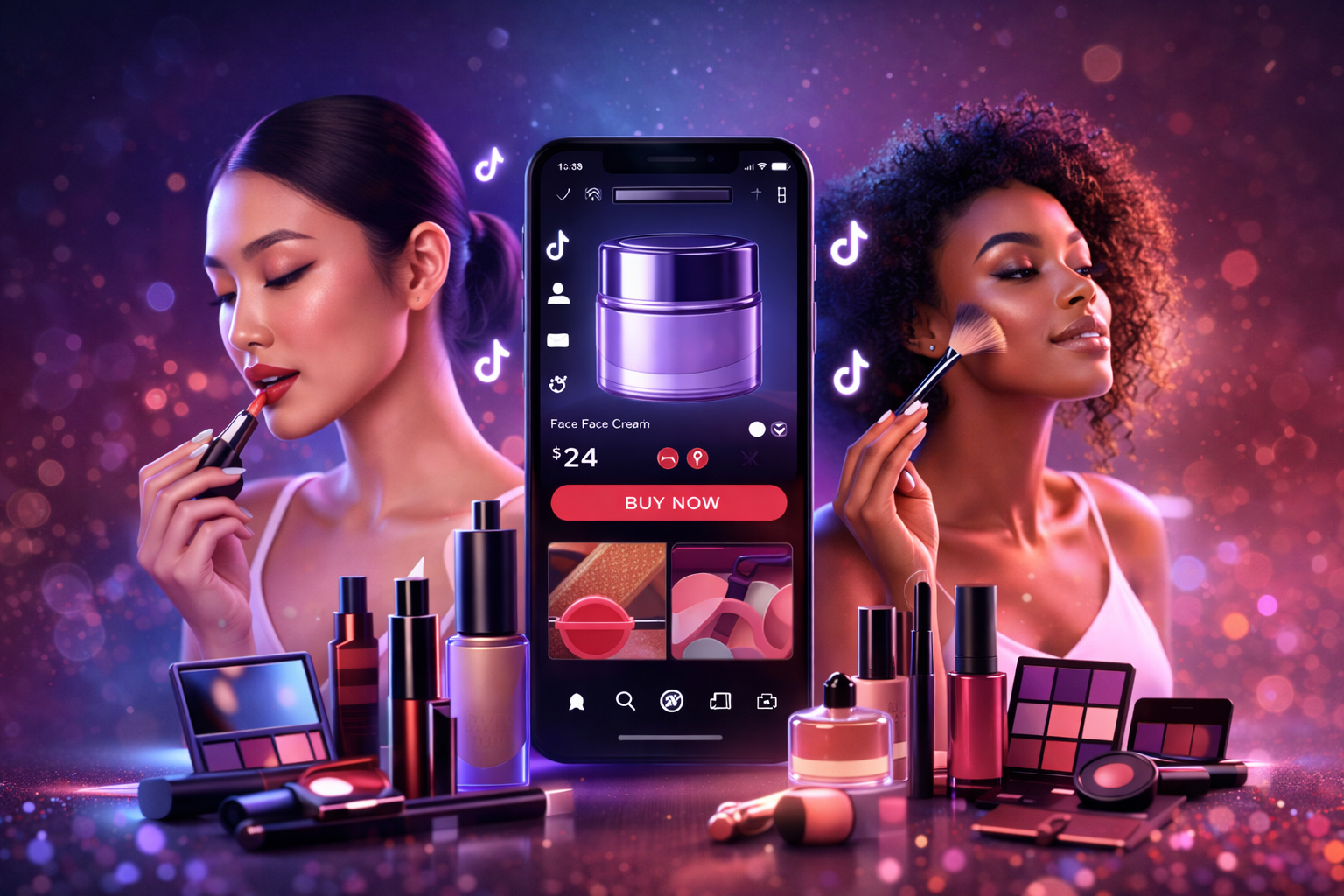
Beauty remains the highest-performing category on TikTok Shop in the United States. As social commerce matures, more brands are actively searching for the top beauty influencers for TikTok Shop to generate measurable revenue rather than surface-level engagement.
In 2025, the beauty category generated approximately $14 million in GMV within the U.S. TikTok Shop ecosystem, outperforming apparel, home goods and accessories. Earlier platform data shows that more than 370 million units of beauty and personal care products were sold through TikTok Shop. The category accounted for 79.3 percent of total U.S. sales, representing roughly $1.34 billion in revenue.
This performance reflects a structural shift in consumer behavior. TikTok has evolved from a discovery platform into a closed-loop commerce environment where product discovery, education and checkout happen inside the same feed. According to consumer research, 45 percent of TikTok users say paid influencer content directly influences their purchasing decisions. Social commerce agency eCOMMOP reports that 77 percent of Gen Z users discover products on TikTok and 71 percent acknowledge impulse purchases triggered by creator content.
These figures explain why beauty influencers for TikTok Shop are not simply brand promoters. They function as direct revenue drivers within the platform’s affiliate and livestream ecosystem.
Beauty performs particularly well on TikTok because the format supports visible transformation. Creators demonstrate texture, shade payoff, before-and-after results and full routines in real time. The hashtag #GRWM has accumulated more than 181 billion views, reinforcing how routine-based content builds scalable trust.
In 2026, campaigns such as #TrippinWithTarte, hosted by Tarte Cosmetics, show how experiential creator marketing amplifies both awareness and sales. When combined with affiliate tools and livestream shopping, top beauty influencers for TikTok Shop operate as performance partners capable of generating trackable GMV.

Choosing from the top beauty influencers for TikTok Shop requires more than checking follower counts. Sellers must evaluate conversion capability, audience alignment and platform-specific expertise. The difference between a viral creator and a revenue-driving creator often comes down to structural fit.
Below are the key criteria brands should use when evaluating TikTok Shop beauty influencers.

Not all creators convert equally. A 2025 market analysis found that mid-tier influencers with 10,000 to 250,000 followers consistently outperformed celebrity creators in return on investment. Higher posting frequency, perceived authenticity and stronger community trust contributed to better sales outcomes.
Sellers should examine whether the influencer’s audience aligns with their target buyer. This may include:
It is also important to confirm that the creator operates within a transactional beauty niche. Influencers who actively sell products on TikTok Shop, especially skincare influencers who sell products on TikTok, are structurally different from general beauty entertainers.
Niche beauty bloggers, makeup reviewers and routine-focused creators often generate deeper trust than broad lifestyle celebrities.
Top beauty influencers for TikTok Shop understand how to use the platform’s commerce tools effectively. This includes:
Some creators are content specialists. Others are sales drivers who convert bottom-of-funnel viewers. Brands should review historical campaign data where possible, including:
A strong TikTok Shop beauty affiliate strategy prioritizes natural product integration and clear calls to action. Hard selling typically underperforms compared to authentic recommendation formats.
Short-form video performance depends heavily on authenticity. Industry reports estimate that up to 40 percent of influencer-driven ROI comes from short-form formats such as tutorials and product demos.
High-performing cosmetic influencers post consistently and maintain a relatable presentation style. Formats that convert well include:
TikTok reported more than 8 million hours of live shopping sessions in 2024. This reinforces the importance of creators who are comfortable speaking in real time and interacting directly with viewers.
Live commerce has become a core driver of TikTok Shop revenue. There are two dominant formats:
Successful livestream creators combine energy, clarity and audience management skills. They can respond to comments, address objections and convert impulse interest into immediate purchases.
For example, creators such as P.Louise generated $2.7 million in 14 hours during a single live event. These outcomes demonstrate how top beauty influencers for TikTok Shop can function as direct revenue channels.
Brands should evaluate whether potential partners can sustain live engagement and maintain narrative flow during extended sessions.
High-performing influencer partnerships extend beyond organic reach. User-generated content created by beauty influencers can be repurposed for:
Segmenting creators by functional strengths improves performance planning. Some creators specialize in polished content production. Others excel in live selling. Others hold strong authority within a specific beauty category.
Modern AI tools now assist brands in identifying and evaluating creators at scale. These systems analyze engagement patterns, detect audience fraud and forecast revenue potential.
For sellers, data-driven selection reduces risk and increases the likelihood of partnering with beauty creators who deliver measurable TikTok Shop sales rather than inflated engagement metrics.
Below is an updated 2026 list of U.S. beauty influencers who have demonstrated strong conversion power on TikTok Shop. The data stems from Charm.io and independent market reports, primarily covering 2024–2025 sales, but these creators remain relevant in 2026. Each entry also notes whether the influencer began as a YouTube beauty influencer, beauty blogger or other platform star, reflecting crossplatform appeal.
While micro and midtier creators drive the highest ROI, large personalities still shape trends and brand visibility. Nikita Dragun, one of the earliest YouTube beauty influencers, built an empire through dramatic transformations and later launched Dragun Beauty.
Fellow YouTube crossovers like James Charles, Bretman Rock and Jackie Aina have tens of millions of followers and are considered top beauty influencers but command high fees and broad audiences; these celebrities are better suited for awareness campaigns than direct TikTok Shop conversions.
The 2024 Tarte brand trip shows how megastars still generate buzz: Tarte revived its influencer trips in 2023 after a pandemic pause and whisked creators like Avani, Madi Monroe and Soo Youn Lee to Bora Bora, setting social feeds alight. Sellers should weigh whether paying for such prestige aligns with their goals or if partnering with midtier “skincare influencers who sell products on TikTok” offers better ROI.
Identifying the top beauty influencers for TikTok Shop is only the first step. Converting creator partnerships into measurable GMV requires structured execution and clear performance alignment.
Beauty content thrives when it educates, entertains and builds trust. The following formats consistently drive TikTok Shop sales:

Working with the right creators is only one part of TikTok Shop success. eCOMMOP offers a holistic Tiktok Shop management solution that combines strategy, operations and talent:

Beauty’s dominance on TikTok Shop shows no sign of slowing. The 2025 data reveals that mid-tier creators drive higher ROI than celebrities, and that categories like skincare sets, whitening products and sunscreen will continue to grow. For sellers, success in 2026 hinges on selecting influencers whose audience and content style align with your product, ensuring they understand TikTok Shop mechanics and favouring authenticity over polish. Incorporating formats like demos, storytelling and live selling, and leveraging AI-driven data to choose partners, will maximise ROI. Full- service operators like eCOMMOP can further streamline operations, manage creator relations and scale performance. By blending the right talent, content and strategy, brands can turn TikTok from a discovery platform into a reliable sales channel.
For brands looking to launch their own beauty products on TikTok Shop, creator strategy is only part of the equation. The product itself needs to be developed with the right positioning, formulation and packaging for its target audience.
Brands exploring skincare or personal care can work with an experienced private label skincare manufacturer such as Luxa Skincare to develop products from concept and formulation through packaging and production. Combining a creator-led TikTok Shop strategy with a product designed for strong visual demonstration can give brands a more solid foundation for testing and scaling.
Most agencies own a slice. The TikTok agency doesn't see your Amazon listing performance. Your Amazon manager doesn't know what's going viral on TikTok. Your Shopify CRO consultant doesn't see either.
We see all of it. Same team, same dashboards, same weekly review. When a TikTok video starts converting at 4×, we know to push that creative into Amazon Sponsored Brands and Shopify paid social — that same week. When Amazon shows a SKU running hot in Texas, we ramp creator seeding for that geo.
That's what "one engine" means in practice. One team. One dataset. One P&L view.