.svg)


Fashion has emerged as one of the highest-performing categories on TikTok Shop, driven largely by influencer-led video commerce. As the platform scales in the United States, apparel brands are increasingly searching for the top fashion influencers for TikTok Shop who can convert engagement into measurable sales.
TikTok Shop reached 71 million U.S. shoppers in 2025, reflecting nearly 25 percent growth compared to 2024. Approximately 45.5 percent of U.S. TikTok users have already made at least one purchase through the platform. This shift confirms TikTok’s evolution from entertainment app to integrated commerce ecosystem.
Fashion sits near the top of this expansion. More than 58 percent of social shoppers purchased products through short-form video content, and clothing ranked just behind beauty and personal care among TikTok Shop’s highest-grossing categories. The platform’s demographic profile reinforces this momentum. Around 38.5 percent of users are aged 18 to 24, a Gen Z segment that embraces discovery-driven shopping. Research shows that 61 percent of users discover new brands on TikTok, while 55 percent of impulse purchases in 2022 were influenced directly by content on the app.

The financial scale is significant. TikTok Shop generated $9 billion in GMV during its first full year in the United States. Since mid-2024, monthly U.S. sales have exceeded $1 billion. For apparel and accessories brands, this establishes TikTok Shop as a serious and sustained revenue channel.
For fashion sellers, the advantage lies in visual persuasion. Try-on hauls, styling breakdowns, thrift finds and wardrobe edits translate naturally into short-form video. TikTok’s algorithm distributes this content to highly targeted audiences, accelerating both discovery and checkout. Around 78 percent of shoppers discover products through influencers, and 84 percent report that TikTok Shop is easy to use. Combined with strong repeat purchase behavior, these dynamics make influencer-led fashion marketing a scalable growth lever.
This guide outlines how to evaluate the right creators and profiles the top fashion influencers for TikTok Shop in the United States who consistently help apparel brands turn views into conversions.
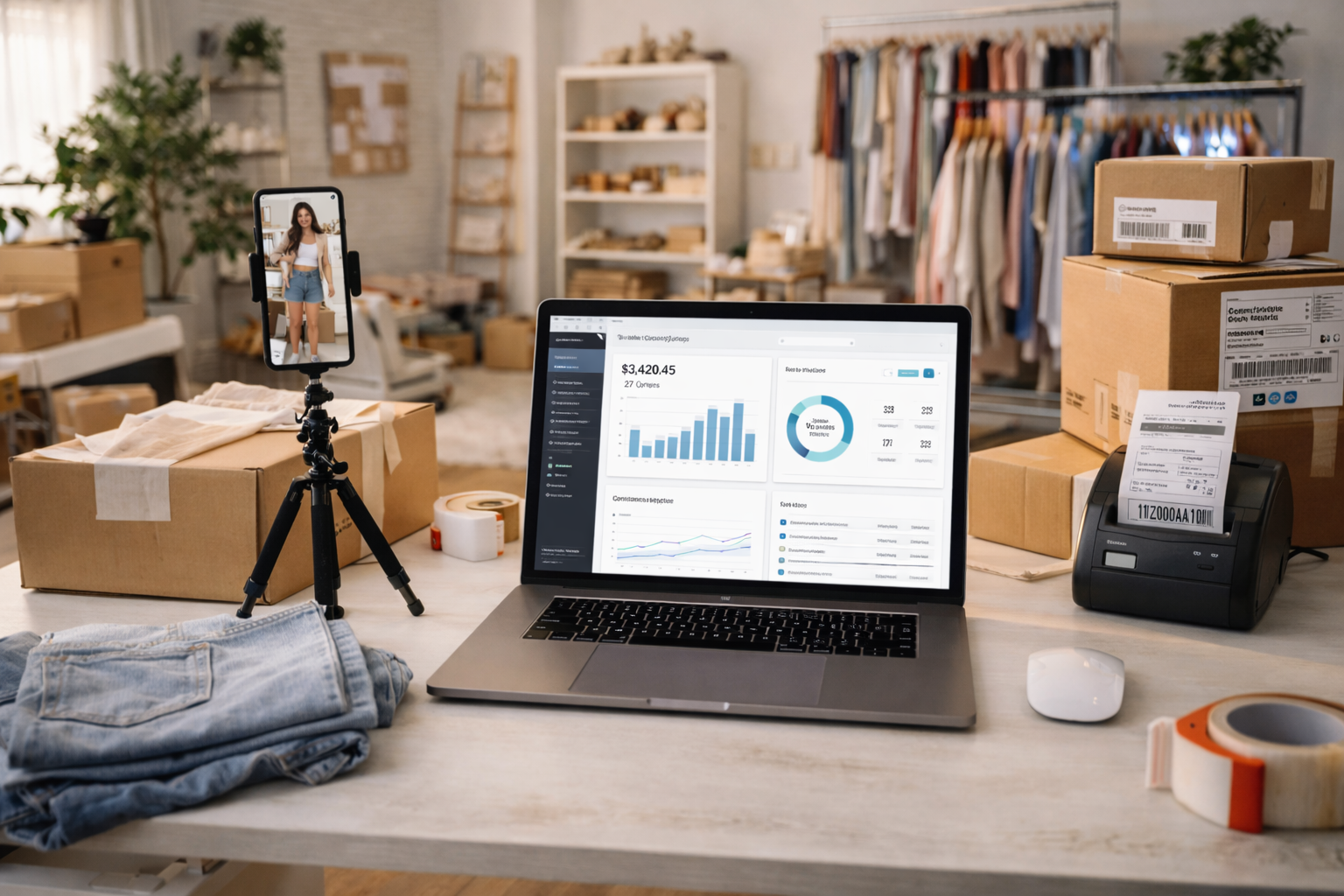
TikTok Shop is not a one-size-fits-all marketplace, particularly for apparel brands. Fashion purchasing decisions involve fit, styling context and personal identity. Selecting the right fashion influencers for TikTok Shop requires understanding both platform behavior and how your specific audience evaluates clothing online.
When assessing potential partners, apparel sellers should focus on the following criteria.
Gen Z and millennial consumers dominate TikTok Shop. Brands should prioritize creators whose followers closely reflect their target demographics and shopping preferences.
In fashion, niche alignment is critical. Relevant segments may include:
Creators such as Dani DMC and Remi Bader built loyal audiences by addressing size inclusivity and body positivity. Sara Camposarcone’s sustainable maximalism attracts vintage and eco-conscious shoppers. Clear niche positioning improves trust and increases conversion likelihood.
Apparel buyers are highly sensitive to fit, drape and sizing inconsistencies. Trust plays a central role in reducing hesitation and return rates.
High-performing fashion influencers for TikTok Shop build credibility through transparency. Plus-size creators like Remi Bader openly critique garments that do not fit properly. Denise Mercedes’ #StyleNotSize series demonstrates identical outfits on different body types, helping viewers visualize how products may look on them.
This honesty lowers purchase anxiety and supports confident checkout decisions.
Creators who actively use TikTok Shop understand the mechanics of social commerce. They tag products directly in videos, host live sessions and manage affiliate storefronts.
Experienced influencers know how to:
Top fashion influencers for TikTok Shop do not treat the platform as pure entertainment. They operate within its commerce framework.
TikTok’s distribution system rewards frequency and consistency. Brands should prioritize influencers who post regularly, whether through daily outfit inspiration, styling breakdowns, thrift hunts or fashion hauls.
Consistent publishing keeps product links visible, increases algorithmic exposure and supports repeat purchase behavior.
Live commerce plays a growing role in TikTok Shop apparel sales. Influencers who can host interactive sessions, answer fit questions and present time-sensitive offers generate higher GMV.
Effective live hosts combine styling advice with urgency. They highlight bundles, limited drops and exclusive promotions, creating a sense of immediacy that drives checkout.
For apparel brands, live capability often separates high-engagement creators from high-conversion partners.
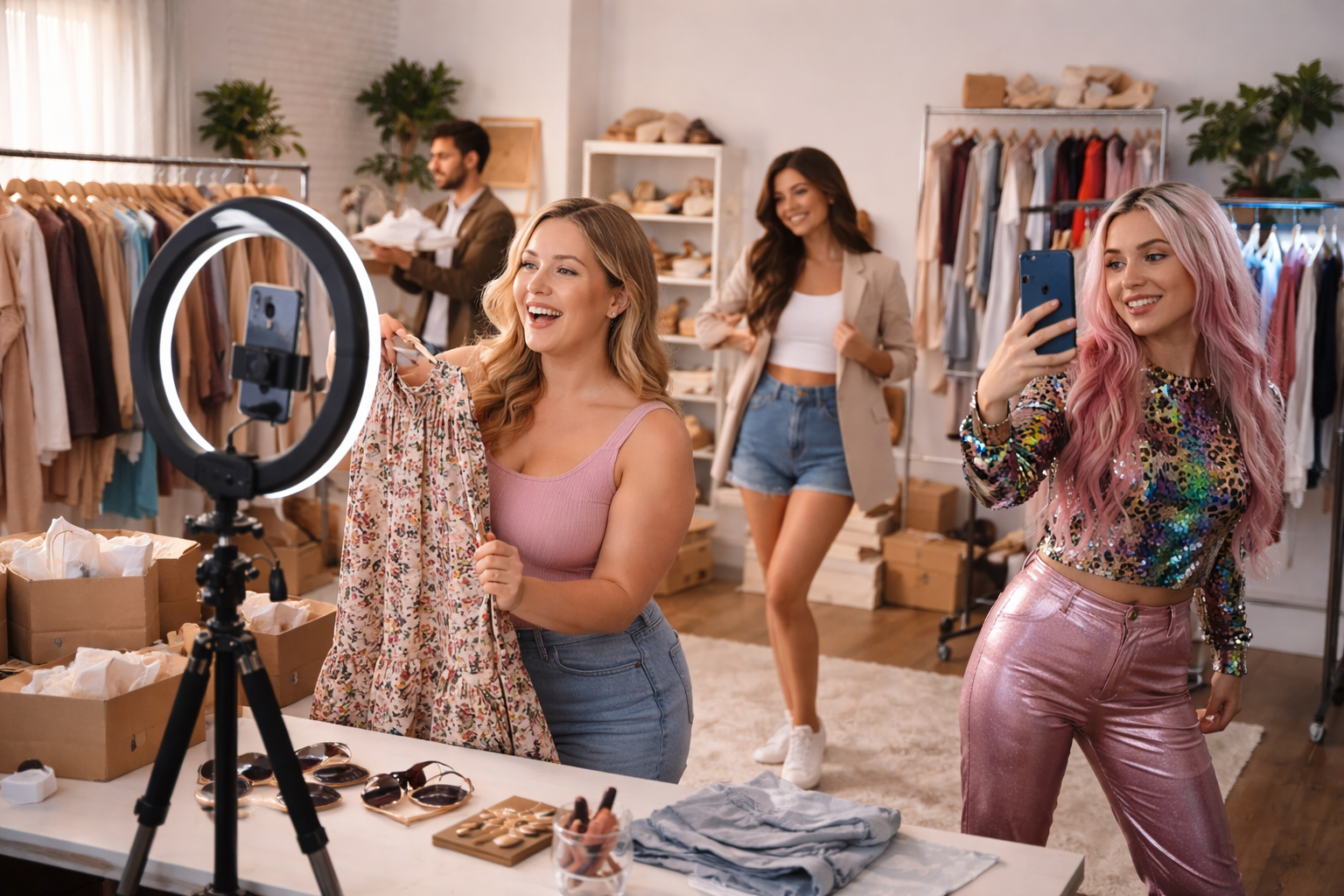
The strongest influencer partnerships extend beyond organic posting. High-quality user-generated content can be repurposed for paid campaigns, brand-owned TikTok accounts and product pages.
Apparel brands should work with creators who:
A measurable framework allows sellers to evaluate which fashion influencers for TikTok Shop generate sustainable revenue and scale those partnerships accordingly.
The U.S. fashion creator ecosystem is highly segmented, spanning plus-size advocates, sustainable thrifters, streetwear stylists and menswear educators. For apparel brands operating on TikTok Shop, selecting the right creator is not simply about reach. It is about conversion capability, audience trust and platform fluency. The following list profiles nine of the top fashion influencers for TikTok Shop in the United States who consistently translate engagement into measurable apparel sales.
These creators represent the full spectrum of U.S. fashion voices on TikTok Shop, each addressing a distinct purchasing barrier within the apparel category.
Plus-size advocates such as Remi Bader and Dani DMC provide visible proof of size inclusivity, reducing fit uncertainty and increasing purchase confidence. Denise Mercedes’ #StyleNotSize series normalizes trend adoption across body types, helping shoppers visualize how garments translate beyond standard model sizing. Brittany Xavier bridges aspirational fashion with family-oriented storytelling, appealing to both millennial buyers and Gen Z audiences within the same content ecosystem.
Sustainable and thrift-focused influencers including Sara Camposarcone and Macy Eleni connect with eco-conscious consumers who prioritize creativity and longevity over fast fashion. Their styling content demonstrates how preloved or vintage pieces can integrate into modern wardrobes, aligning with growing demand for responsible consumption.

In menswear, creators such as Julian Carter, Parker York Smith and Nolan White address a rapidly expanding segment of TikTok Shop apparel sales. Through educational videos on tailoring, DIY customization and long-term wardrobe building, they reduce friction for male shoppers who often seek guidance before purchasing.
Collectively, these top fashion influencers for TikTok Shop drive both discovery and conversion. They do not simply showcase outfits. They address fit, styling context, sustainability values and long-term wardrobe decisions, helping apparel brands turn attention into measurable sales.
Fashion sales on TikTok Shop are driven by a small number of high-performing content formats. For apparel brands, understanding which structures consistently convert is as important as selecting the right influencers.
Shoppers want to see how garments fit on real bodies in real settings. Plus-size creators such as Remi Bader openly share sizing details, fit challenges and honest critiques. This transparency reduces uncertainty and lowers return risk.
Try-on sequences paired with commentary on drape, fabric quality and comfort resonate strongly with apparel buyers. When top fashion influencers for TikTok Shop address fit friction directly, conversion rates improve.
Daily outfit diaries and styling breakdowns help viewers understand how to wear a piece beyond a single look. Educational content increases perceived value.
Nolan White’s color palette guides and Parker York Smith’s wedding attire tips illustrate how instructional styling content supports purchasing decisions. Showing multiple outfit combinations positions a product as versatile rather than trend-driven.
The thrifting and resale community continues to grow on TikTok. Creators such as Sara Camposarcone and Macy Eleni document estate sale trips, upcycling projects and sustainable styling tips.
These videos appeal to eco-conscious consumers and emphasize creativity. For brands aligned with sustainability or vintage aesthetics, this format strengthens authenticity and differentiation.
Live commerce allows influencers to move viewers from interest to checkout in real time. During live sessions, creators can demonstrate collections, answer sizing questions and highlight limited inventory.
Retail marketers consistently note that combining short-form teaser clips with longer product demonstrations increases effectiveness. For TikTok Shop apparel brands, live styling sessions and flash sales replicate the urgency of a traditional shopping channel while preserving platform-native authenticity.
Time-sensitive promotions drive immediate action. Data shows that 58 percent of shoppers are more likely to purchase from TikTok Shop when offered a coupon or discount.
Exclusive bundles, TikTok-only pricing and countdown deals create urgency that accelerates conversion, especially when presented by trusted fashion influencers for TikTok Shop.
Audiences respond to narrative-driven content that blends personality with product education. Brittany Xavier’s family-focused vlogs and Julian Carter’s DIY tutorials humanize the creator while reinforcing expertise.
This combination of relatability and instruction builds trust over time. In fashion, where identity and self-expression play central roles, authentic storytelling strengthens both engagement and purchase intent.

Choosing the right tier of fashion influencer on TikTok Shop can significantly impact conversion rates, budget efficiency and overall return on investment. Influencer size affects not only reach, but also engagement quality, cost structure and sales performance.
Below is a clear breakdown to help apparel brands determine which tier aligns best with their goals.
Micro influencers typically maintain tight-knit communities with strong engagement rates. Their audiences often follow them for specific style niches such as plus-size fashion, sustainable thrifting, menswear education or alternative styling.
For TikTok Shop apparel brands, micro influencers are best suited for:
Because their fees are generally lower and engagement is more concentrated, micro fashion influencers for TikTok Shop often deliver strong conversion rates relative to cost. They are particularly effective for emerging brands seeking traction without large upfront investment.
Mid-tier creators often offer the strongest balance between reach and conversion efficiency. They typically have established credibility within their niche while still maintaining meaningful audience interaction.
For apparel brands, mid-tier influencers are ideal for:
This tier frequently produces some of the highest ROI on TikTok Shop because creators combine trust with broader distribution. Many mid-tier fashion influencers also have experience with affiliate storefronts, live product tagging and short-form plus long-form content integration.
Large influencers provide substantial reach and brand visibility. They are often well known beyond TikTok and may operate across multiple platforms.
For TikTok Shop apparel brands, established creators are most effective for:
However, engagement rates may be lower compared to micro or mid-tier creators, and partnership fees are typically higher. While large influencers can generate significant visibility, they may not always deliver the highest direct conversion efficiency.
For most apparel sellers focused on measurable sales growth, mid-tier and micro fashion influencers for TikTok Shop often produce stronger conversion rates than large celebrity creators. Smaller communities tend to demonstrate higher trust and clearer niche alignment, which reduces hesitation around fit and styling decisions.
That said, optimal strategy depends on campaign objective. Awareness campaigns may benefit from established creators, while performance-driven initiatives typically perform better with mid-tier or niche-focused influencers.
The most effective TikTok Shop apparel brands do not rely on a single tier. They build a structured creator mix that balances reach, trust and repeat exposure to maximize both discovery and conversion.
Identifying the top fashion influencers for TikTok Shop is only part of the equation. Sustained growth requires coordinated execution across creator management, store optimization and fulfillment operations.
eCOMMOP operates as an end-to-end TikTok Shop growth partner for apparel brands. Rather than focusing solely on influencer sourcing, the platform integrates creator strategy with commerce infrastructure.
Its services include:
This integrated model ensures that content, conversion and operations function as a single system.
According to internal performance data, eCOMMOP’s structured approach increases conversion rates by 20 to 40 percent and delivers engagement levels two to five times higher than traditional influencer campaigns. Typical projects generate between 50 and 300 user-generated videos, creating a scalable asset library for testing, repurposing and paid amplification.
By centralizing influencer partnerships, paid distribution and logistics under one operational framework, eCOMMOP enables TikTok Shop apparel brands to focus on product development and design while the commerce engine runs in the background.

TikTok Shop has reshaped how consumers discover and purchase clothing. With Gen Z driving trend cycles and impulse behavior accelerating through short-form video, apparel brands must align with creators who reduce friction and build purchase confidence.
The fashion influencers profiled in this guide represent distinct segments of the U.S. market, from plus-size advocates and sustainable thrifters to menswear educators. Each demonstrates how niche authority and transparent content translate into measurable sales performance.
Success on TikTok Shop depends on more than visibility. Brands that leverage proven content formats, prioritize retail fluency and implement structured influencer systems are positioned to convert attention into revenue. When supported by performance-oriented TikTok Shop management partners such as eCOMMOP, fashion brands can scale creator collaborations into sustainable growth and long-term customer loyalty.
Most agencies own a slice. The TikTok agency doesn't see your Amazon listing performance. Your Amazon manager doesn't know what's going viral on TikTok. Your Shopify CRO consultant doesn't see either.
We see all of it. Same team, same dashboards, same weekly review. When a TikTok video starts converting at 4×, we know to push that creative into Amazon Sponsored Brands and Shopify paid social — that same week. When Amazon shows a SKU running hot in Texas, we ramp creator seeding for that geo.
That's what "one engine" means in practice. One team. One dataset. One P&L view.