.svg)


Learning how to design a bag and get it made is one of the first challenges every fashion entrepreneur faces. While the idea may begin with a simple sketch or inspiration board, turning that concept into a market-ready product requires a structured bag product development process that includes design, material sourcing, prototype creation, manufacturing, and quality control.
The opportunity is significant. According to Grand View Research, the global luggage and bags market is valued at more than US$180 billion, driven by growing travel demand, lifestyle trends, and eCommerce expansion. As competition increases, successful brands need more than attractive designs. They need products that solve customer problems, can be manufactured efficiently, and maintain consistent quality as they scale.
Whether you're developing a handbag, backpack, tote bag, or private-label collection, understanding the complete bag design process can help reduce costly mistakes and improve your chances of building a successful product.
Many aspiring founders assume that a strong design is enough to create a successful product. In reality, product failure often occurs long before manufacturing begins.
Research published by CB Insights found that a lack of market demand remains one of the most common reasons startups fail. The same principle applies to product development. A beautifully designed bag may still struggle if it fails to address a genuine customer need or enters an already crowded market without meaningful differentiation.
Some of the most common mistakes include:
Many successful products are not radically different from existing alternatives. Instead, they improve specific aspects of the customer experience, such as durability, organization, comfort, sustainability, or functionality.
Before investing in design and manufacturing, founders should spend time understanding the market they intend to enter.
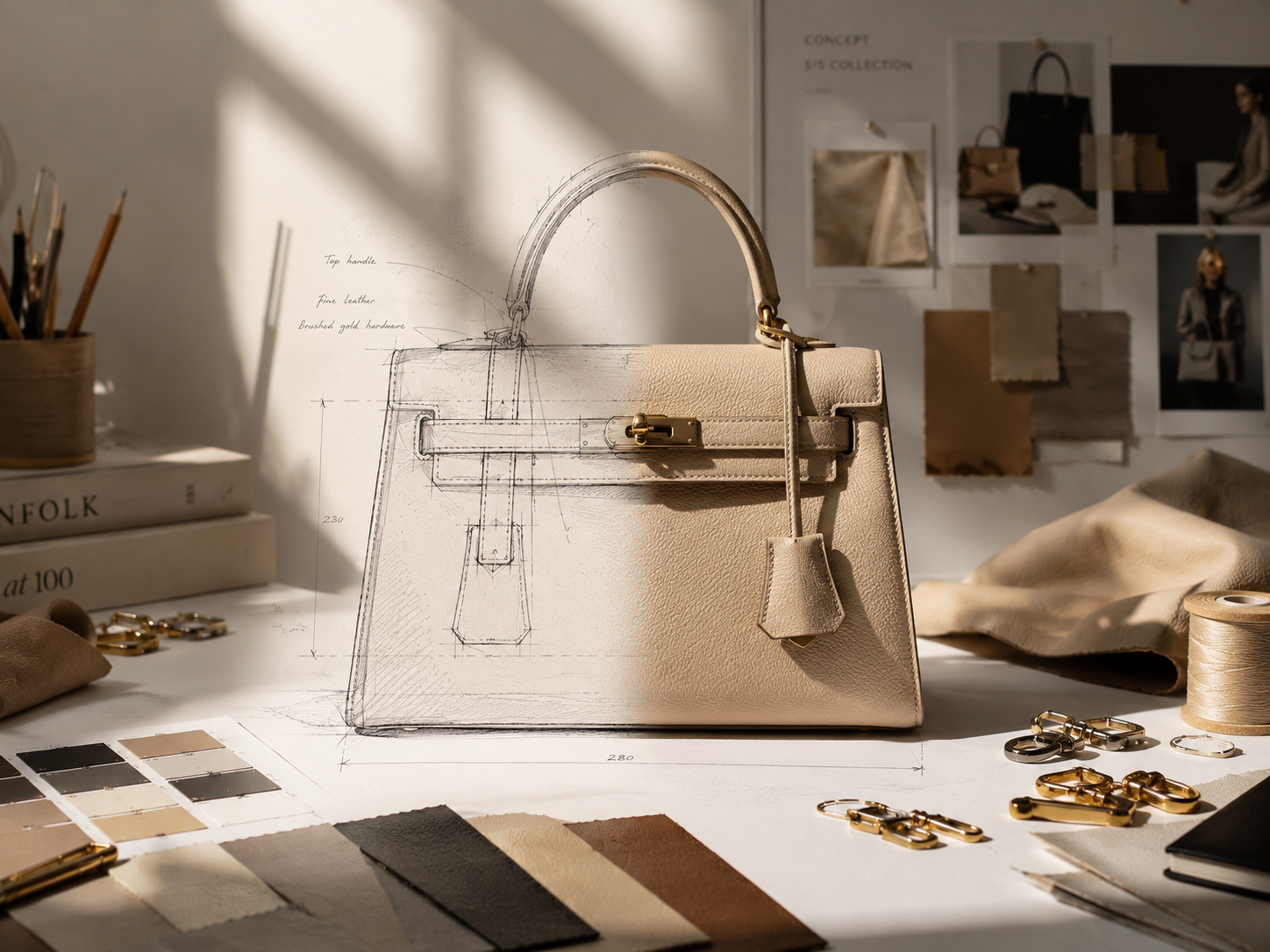
Bag product development is the process of transforming an idea into a product that can be manufactured consistently and sold profitably. While every brand follows its own workflow, most projects move through a similar series of stages.
The first step involves understanding the target customer and evaluating whether the product idea addresses a genuine need. Market research, competitor analysis, customer interviews, and review analysis can all provide valuable insights.
Rather than asking whether a design looks attractive, founders should ask whether customers would choose it over existing alternatives.
Once the concept has been validated, designers begin defining the product's appearance, dimensions, compartments, materials, and functionality. This stage often includes sketches, digital renderings, mood boards, and reference products.
Technical specifications transform creative concepts into manufacturing instructions. This stage includes measurements, material specifications, construction details, hardware requirements, and branding placement.
Manufacturers produce physical prototypes that allow designers to evaluate comfort, durability, functionality, and overall quality before committing to production.
After sample approval, production planning, quality control procedures, and logistics coordination become the primary focus.
Although these stages appear straightforward on paper, each involves hundreds of small decisions that collectively determine the success of the final product.
One of the biggest misconceptions in bag product design is that successful products begin with creativity alone. In practice, successful products usually begin with observation.
The most effective product developers spend considerable time understanding customer behavior before finalizing design decisions. Reviews on Amazon, Shopify stores, TikTok Shop listings, and competing brands often reveal recurring frustrations that create opportunities for improvement.
For example, customers frequently complain about:
These complaints can become valuable design inputs.
A commuter backpack, for example, must solve different problems than a luxury handbag. A traveler may prioritize storage efficiency, laptop protection, and lightweight construction. A luxury consumer may focus more heavily on craftsmanship, premium materials, and exclusivity.
Understanding these differences helps brands make better design decisions and avoid creating products that appeal only to the founder's personal preferences.
Material selection plays a major role in determining product quality, manufacturing cost, durability, and customer perception. It is also one of the earliest decisions that influences how customers position your brand in their minds.
Different materials support different market segments.

The main material, however, represents only part of the equation. Customers often judge product quality through smaller details such as zipper performance, metal hardware, lining quality, stitching consistency, and overall construction.
According to the McKinsey State of Fashion report, consumers increasingly prioritize quality, durability, and sustainability when making purchasing decisions. As a result, material selection should be viewed as a strategic brand decision rather than a simple cost calculation.
Brands that focus exclusively on lowering material costs often discover that quality issues emerge later through product returns, negative reviews, and reduced customer loyalty.
As designs become more refined, clear communication with manufacturers becomes increasingly important. This is where a professional tech pack plays a critical role.
A tech pack acts as the blueprint for production. It provides manufacturers with detailed instructions regarding dimensions, materials, construction methods, hardware specifications, branding placement, packaging requirements, and quality standards.
A comprehensive tech pack typically includes:
Many first-time entrepreneurs attempt to communicate product requirements through rough sketches and email conversations. While this may work for simple projects, misunderstandings become increasingly common as products become more complex.
Investing in detailed technical documentation often reduces sampling revisions, accelerates communication, and lowers overall development costs.
For many founders, receiving the first prototype is one of the most exciting moments in the product development process. It is also one of the most revealing.
A prototype should not be viewed as a finished product. Instead, it serves as a testing tool that highlights weaknesses, identifies opportunities for improvement, and validates design assumptions.
During sample reviews, brands should evaluate:
Inspect stitching consistency, seam strength, edge finishing, and hardware installation.
Assess compartment layout, storage capacity, zipper performance, and ease of use.
Evaluate strap design, weight distribution, carrying comfort, and ergonomics.
Test materials and hardware under realistic usage conditions whenever possible.
Multiple sample revisions are common and should be expected. Identifying problems during sampling is significantly less expensive than discovering them after thousands of units have already been manufactured.
One of the most common questions entrepreneurs ask is how much it costs to develop a custom bag. The answer varies significantly depending on the complexity of the design, materials used, customization requirements, and manufacturing location. A simple canvas tote may require only modest development costs, while a premium handbag with custom hardware and multiple material components can require a substantially larger investment.
Most product development projects involve several separate cost categories.
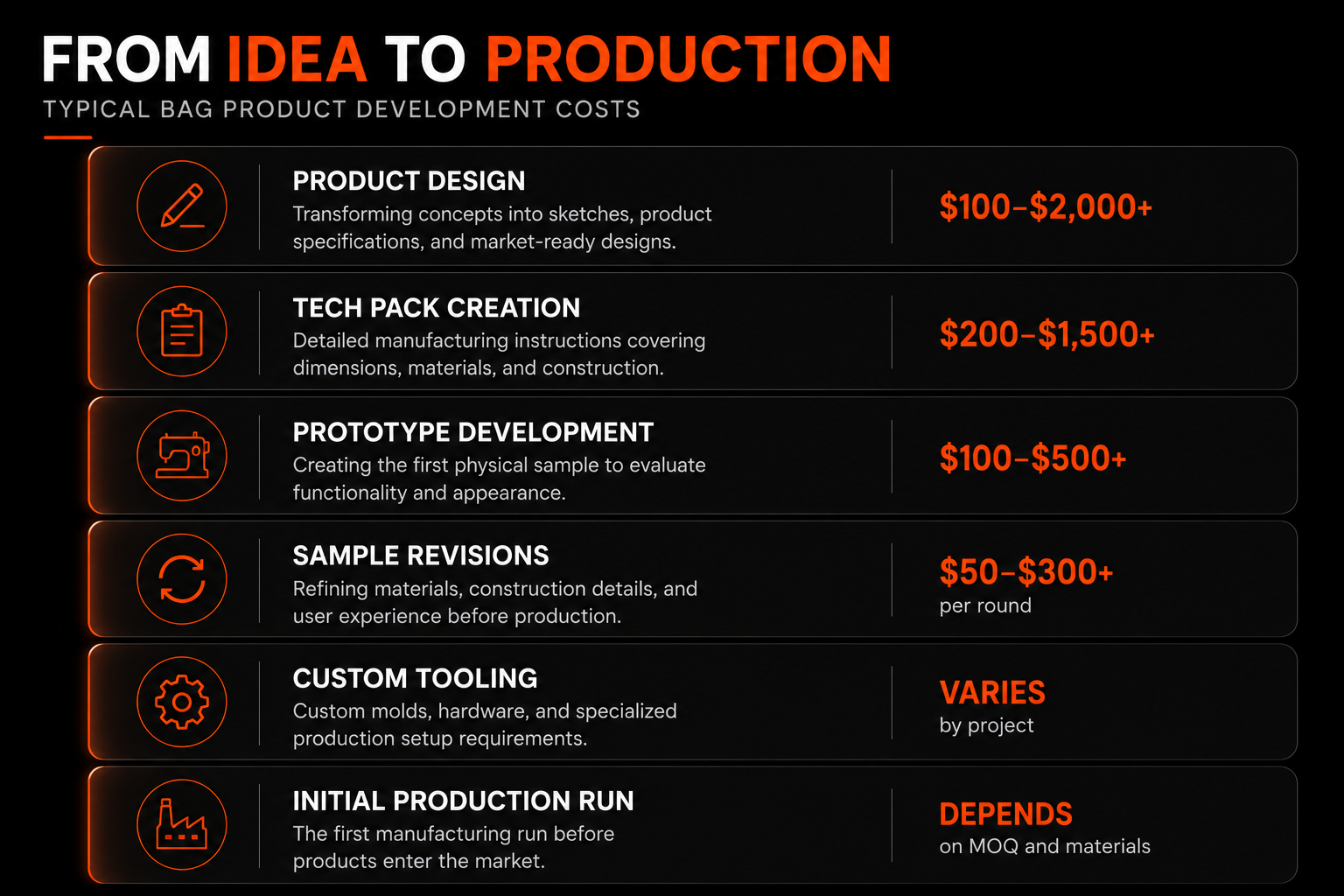
While many founders focus heavily on reducing development costs, experienced brands often prioritize reducing risk. Investing in better technical documentation, higher-quality samples, and thorough testing can prevent expensive mistakes during production. A failed production run can easily cost more than the entire development process.
The most successful brands view product development as an investment in long-term scalability rather than a short-term expense.
Choosing where to manufacture is one of the most important strategic decisions in the product development process. Different regions offer different advantages depending on the product category, target market, budget, and production volume.
In the global textiles and apparel industry, manufacturing remains concentrated in regions that have developed integrated supplier ecosystems, allowing brands to access materials, production expertise, and logistics infrastructure within a single network.
China remains the dominant manufacturing hub for many bag brands because of the depth of its supply chain ecosystem. Fabric suppliers, hardware manufacturers, packaging vendors, sample makers, and production facilities often operate within the same regions, creating efficiencies that can significantly reduce development timelines.
China is particularly well suited for:
For many brands, the biggest advantage is not simply cost but access to a mature manufacturing ecosystem capable of supporting growth.
Vietnam has become an important manufacturing destination for outdoor products, sports bags, and technical sewn goods. The country has developed strong expertise in performance-oriented products and often attracts brands focused on outdoor and travel categories.
India remains a popular option for leather goods and artisan craftsmanship. Brands targeting premium leather products often explore Indian manufacturing because of the country's established leather industry and skilled workforce.
UK manufacturing is typically chosen by brands seeking local production, shorter supply chains, or luxury positioning. While costs are generally higher than overseas alternatives, local production can offer advantages in communication, lead times, and brand storytelling.
Rather than searching for the cheapest option, brands should evaluate manufacturing locations based on product requirements, scalability, quality expectations, and long-term business objectives.
Finding a manufacturer is often easier than finding the right manufacturer. A quick online search may generate hundreds of potential suppliers, but choosing the wrong partner can lead to quality issues, delays, and unnecessary costs.
When evaluating suppliers, consider factors beyond unit pricing.
A factory that specializes in backpacks may not be the best choice for luxury handbags. Product-specific experience often translates into better workmanship and more efficient production processes.
Responsiveness during the sampling phase is often a strong indicator of how communication will function during production. Delays, vague answers, and inconsistent information during early discussions can become larger problems later.
The ability to develop accurate prototypes is one of the strongest indicators of a manufacturer's technical capabilities. Sampling quality often reveals far more than marketing materials or factory presentations.
As brands grow, production requirements often change. Choosing a manufacturing partner that can scale alongside your business may reduce the need to switch suppliers later.
Many brands also work with sourcing partners who can help identify qualified suppliers, negotiate pricing, coordinate sampling, and oversee production. This approach can be particularly valuable for first-time founders navigating international manufacturing for the first time.
Approving a sample does not automatically mean a product is ready for mass production. The transition from prototype to production introduces new challenges that require careful planning.
Before manufacturing begins, brands should confirm:
Production delays are often caused by issues that emerge before manufacturing even starts. Material shortages, packaging changes, approval bottlenecks, and inaccurate forecasts can all affect timelines.
The strongest production plans anticipate these risks rather than reacting to them after problems emerge.
Even experienced manufacturers can encounter production inconsistencies. Materials may vary between batches, construction quality may fluctuate, or packaging standards may not be applied consistently.
For this reason, quality control should be integrated into the production process rather than treated as a final inspection step.
A comprehensive quality control strategy typically includes:
Confirming materials, specifications, and production requirements before manufacturing begins.
Identifying potential issues while products are still being manufactured.
Reviewing finished goods before inventory leaves the factory.
Quality control becomes increasingly important as production volumes grow. A minor issue affecting ten samples can become a significant financial problem if it affects thousands of finished units.
Brands that invest in quality assurance often experience lower return rates, stronger customer satisfaction, and improved long-term profitability.
Launching a product is not the end of the development process. In many ways, it is the beginning of a new phase.
Customer reviews, support inquiries, social media comments, and sales performance all provide valuable information that can guide future product improvements. Successful brands continuously refine their products based on real-world feedback rather than assuming the first version is perfect.
Common post-launch improvements include:
Many of the most successful bag brands today are selling products that have gone through years of refinement and iteration.
Turning an idea into a finished product requires far more than creativity. Successful bag product development combines market research, thoughtful design, material sourcing, technical planning, prototype testing, manufacturing expertise, and quality control into a repeatable process.
While every product follows a different path, brands that invest time in proper development often avoid costly mistakes and build stronger foundations for long-term growth. The goal is not simply to launch a product but to create something that customers trust, recommend, and return to purchase again.
At eCOMMop, we help brands navigate product sourcing, supplier selection, manufacturing coordination, and eCommerce operations. Whether you're developing your first product or expanding an existing collection, our team can help simplify the journey from concept to production.
Explore our product sourcing services
Ready to discuss your project? Contact us today
Most agencies own a slice. The TikTok agency doesn't see your Amazon listing performance. Your Amazon manager doesn't know what's going viral on TikTok. Your Shopify CRO consultant doesn't see either.
We see all of it. Same team, same dashboards, same weekly review. When a TikTok video starts converting at 4×, we know to push that creative into Amazon Sponsored Brands and Shopify paid social — that same week. When Amazon shows a SKU running hot in Texas, we ramp creator seeding for that geo.
That's what "one engine" means in practice. One team. One dataset. One P&L view.