.svg)

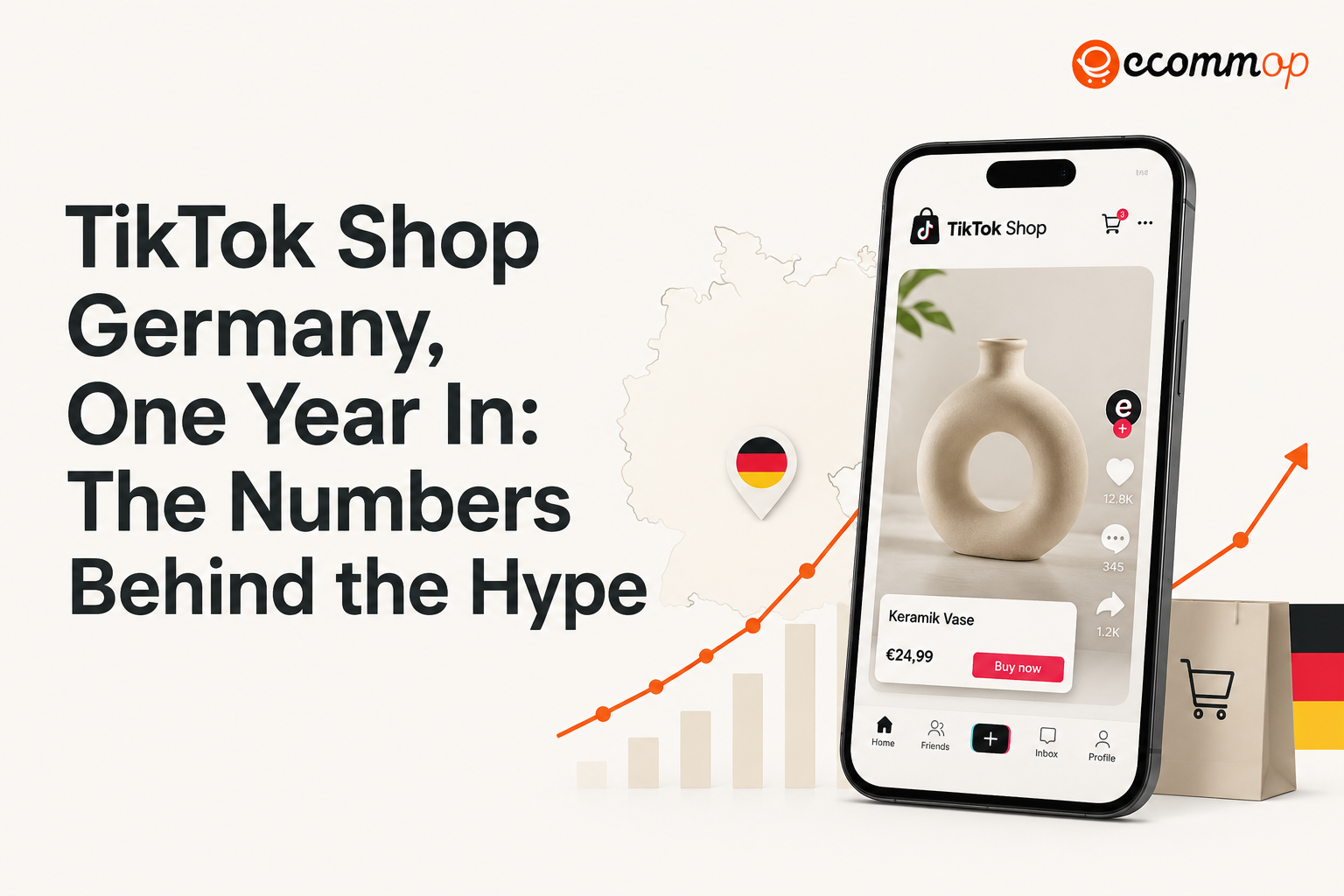
TikTok Shop Germany just turned one, and the data finally gives a real picture of what’s happening behind the scroll-and-buy hype.
A year ago, brands were guessing about social commerce in Germany. Today NielsenIQ has the numbers, and they tell a different story than most people expected.
Penetration among German online shoppers has climbed from 10.5% six months after launch to just over 15% today, according to NielsenIQ. That’s steady growth, not a spike, and steady is harder to fake in retail.
The headline figures from the one-year mark:
• 15%+ of German online shoppers have purchased on TikTok Shop at least once
• 15th largest online retailer in Germany by GMV (NielsenIQ)
• 25,000+ active sellers
• 27 million monthly users reached
• Seller revenue nearly doubled in the past six months
The product mix has matured too. Fashion leads TikTok Shop Germany’s revenue at 17%, followed by electronics at 16% and home and household goods at 14%. Brands like Rossmann and Philips are now active sellers, alongside PepsiCo and names from the LVMH group testing the format.
This isn’t a platform still finding its footing. It’s a platform that found its footing and kept walking.
The assumption going in was that TikTok Shop Germany would be a Gen Z channel: fast fashion and impulse beauty buys, driven by a young audience with disposable income from part-time jobs. The data says otherwise.
Gen X now generates the largest single share of revenue on TikTok Shop Germany, at 37%, more than any other generation, including Gen Z. People in their late forties and fifties are the ones with their cards out.
That’s not a small correction. It changes who the content should target, what tone actually converts, and which products are worth pushing hardest. A brand running TikTok Shop Germany content as if it’s talking to 19 year olds is talking past its best customers.
Growth on TikTok Shop Germany hasn’t come cheap. Commission rose from 5% to 9% in January 2026, the same path TikTok Shop already walked in the UK back in 2024. A handful of categories, electronics among them, get a softer 7% rate, and new stores can lock in 4% for their first sixty days if they list at least five products within fifteen days of opening.
Set against Amazon’s 15% and eBay’s 10 to 12%, TikTok Shop Germany is still the cheaper seat at the table. But the margin advantage that made it look like an obvious land grab a year ago has narrowed.
Layer in the live shopping numbers and the picture gets more interesting. Livestream conversion rates run between 9% and 30%, against 2 to 3% for a standard product listing. The instinct is to assume that comes with higher returns, the usual price of impulse buying. It doesn’t: customers who buy through a livestream return products roughly 40% less often than customers who buy from a static listing.
That’s part of why TikTok plans to roughly triple the number of livestreams running in Germany this year. The economics favor it, and sellers who treat live shopping as a core channel, not an experiment, are positioned to benefit first.
Put the three pieces together. TikTok Shop Germany is growing steadily, its buyer base has shifted toward an older, higher-spending audience, and the cost of playing is rising in step with the opportunity. None of that makes the channel a guaranteed win. It makes it a channel with real, specific economics that reward sellers who plan around the data instead of around assumptions.
If you’re weighing whether to launch or scale on TikTok Shop Germany, we can help you read the numbers that actually apply to your category and build a content and live shopping strategy around them.
Most agencies own a slice. The TikTok agency doesn't see your Amazon listing performance. Your Amazon manager doesn't know what's going viral on TikTok. Your Shopify CRO consultant doesn't see either.
We see all of it. Same team, same dashboards, same weekly review. When a TikTok video starts converting at 4×, we know to push that creative into Amazon Sponsored Brands and Shopify paid social — that same week. When Amazon shows a SKU running hot in Texas, we ramp creator seeding for that geo.
That's what "one engine" means in practice. One team. One dataset. One P&L view.